The Ultimate Domain Metric In 2026
Why Phonetics and the Radio Test Spell the Death For the "Visual-Only" Brand

For over three decades, the domain industry was governed by the eye.
We valued domains based on how they looked on a billboard, a business card, or a browser's address bar.
We tolerated "creative" misspellings, dropping vowels like Flickr, swapping letters like Lyft, or using confusing extensions because the user was always typing into a physical keyboard.
But all this is about to change. Why? Well, for one thing, the keyboard is no longer the primary gateway to the internet, and in 2026, we are about to experience even more changes to what is considered and constitutes a "Premium Domain."
Ambient Computing
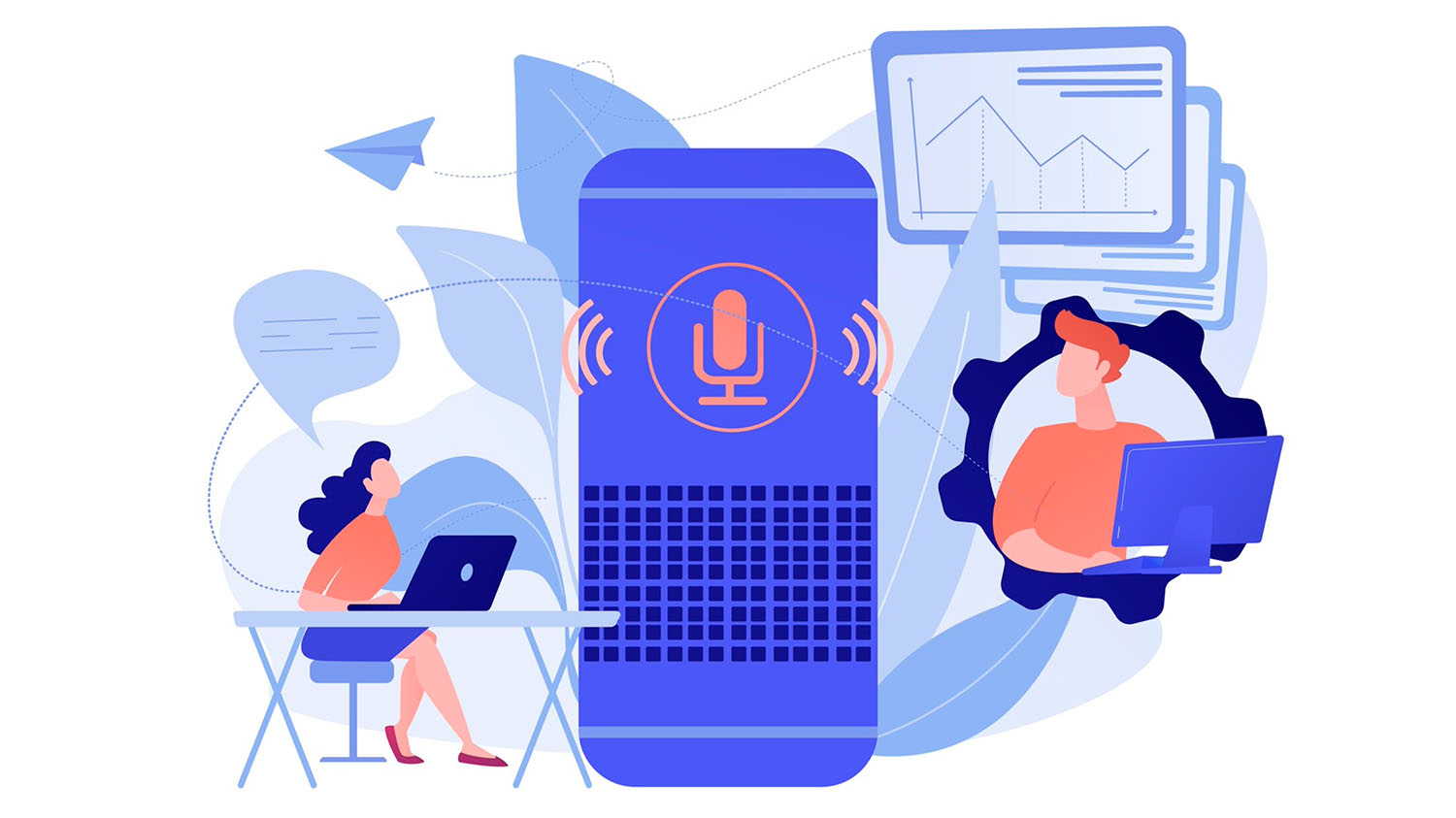
With the explosion of AI-powered ambient computing, neural-link interfaces, and voice-activated agents, we have entered the Voice-First Era.
Today, if a domain name fails the so called "Radio Test," or the ability for a person to hear a name once and spell it correctly, it isn't just a branding hiccup, it's a critical, and more often than not, fatal technical flaw.
As we will explore, names like Otrivio are becoming the gold standard for this new age, precisely because they bridge the gap between human phonetics and machine intelligence. In other words, they not only look as good as they sound, but are memorable to everyone and everything.
The Four Ages of Naming
To understand where we are going, we must look at how we got here.
The evolution of the domain market can be broken down into four distinct eras of naming philosophy.
The Descriptive Era (1995–2005)
In those very early days of the web, SEO was primitive. If you sold shoes, you quite literally wanted Shoes.com.
The goal was literalism.
These domains were valuable because they told the user exactly what was in the box.
However, as the supply of generic .coms dried up, the market was forced to evolve... and it did.
The "Web 2.0" Vowel-Drop Era (2005–2015)
Driven by the scarcity of short names, startups began hacking the English language giving us brands like Flickr, Tumblr, Scribd, and Razr.
These names were "cool" and visual, but they failed the Radio Test miserably.
Founders spent millions in marketing just to tell people, "It’s like the word 'Tumbler,' but without the E."
It was a time spent optimising for the screen and the sticker on the back of a laptop, and all because humans were still the primary navigators and could be trained to remember a misspelling.
The Abstract/ Brandable Era (2015–2023)
And so, we moved on. The "Vowel-Drop" trend became a parody of itself, venture-backed startups pivoted towards pure abstraction, giving us names like Zillow, Mondo, and Slack.
This branding shift wasn't necessarily descriptive, or helpful for that matter in promoting any product or service that was being offered, but chose instead to focus on names that were short, punchy, and—most importantly—available for trademark.
The goal here was something that is often referred to as "Empty Vessel Branding".
In short, take a word that means nothing and pour millions of dollars of meaning into it.
These brands thrived in the age of Social Media Feeds. They looked great in a square app icon and were short enough for a Twitter bio. But they still relied on a visual interface to bridge the gap between the name and the service.
The Voice-First Era (2024–)
Times continue to change, and the rise of artificial intelligence accelerated that change.
The "Empty Vessel" is leaking and the "Vowel-Drop" is dead, meaning that arguably, the single most important metric for a domain today is "Phonetic Fluidity".
With the rise of "Agentic Commerce," users were no longer confined to typing. A new age arrived where you tell your AI, your Siri or Alexa, "Order a leather repair kit from a brand called...." and the AI acts as a high-speed filter.
The consequences of this new form of communication and commerce were, and remain, evolutionary.
If your brand is Lthr.io, the AI might categorise that as a data error or redirect you to Leather.com instead. That's death for any business because AI doesn't understand "clever" it understands fact.
We now live in an era now where the AI interested in your "edgy" visual branding, or the brilliance of a marketer. It cares about one thing, and one thing only. The path of least resistance in natural language processing (NLP).
The Radio Test is Now the "AI Resolution Test"
In previous eras, the "Radio Test" was a suggestion. The idea that something should sound as it reads.
In 2026, the Radio Test it is the law.
If a user speaks your domain, does the AI assistant resolve it to your IP address, or does it offer a list of three competitors with "clearer" names?
To illustrate my point, imagine the scenario. You're at home with your child and decide to order a toy. So, you ask Alexa to order a yellow bus from Playskool. But is it Playskool, Play School, or Playschool?
The "Visual-Only Brand" is a brand that requires a screen to disambiguate its spelling, and the difference can be enormous.
- Visual-Only: Qwik-Fix.com (Needs to be seen to be spelled).
- Voice-First: QuickFix.com (Is spelled exactly how it sounds).
And when I said that the difference can be enormous, the difference in this case would be between ordering synthetic urine and ordering a contractor or maintenace worker to repair your property.
In the 2026 economy, Ambiguity is a Tax.
Every time your brand name requires a clarification, such as "That's 'Quick' with a 'K' at the end" you are essentially paying a conversion tax that your competitors are not.
Why the .com has Re-Emerged as the Supreme Utility
While the 2010s saw a massive explosion of "niche" extensions such as .shop, .beauty, .tech, and .guru, the Voice-First Pivot has inadvertently solidified the .com as the only "Zero-Prompt" extension.
Of course, this is bad news for all the .io and .ai domain owners who have paid exorbitant registration fees for domains they believed would be popular and valuable, rather than practical and functional.
Don't believe me? Well, let's look at this for a minute.
When a human speaks to an AI agent, they rarely specify the extension. They say, "Go to Nike" or "Look up Delta."
Ask yourself, have you ever had to differentiate between Nike.com or Nike.io? That's because Nike means Nike to you.
AI models are trained on the "Likelihood of Intent." Statistically, the likelihood that a user wants the .com version of a name is not only higher, but significantly higher than any other TLD. Consequently, AI agents default to the .com unless specifically told otherwise. Now, that might be good news for leading, major brands, but where does that lead the startup entrepreneurs and those that domain owners are often targeting to try and sell or otherwise lease their domains to?
Sadly, not in a very good position, if you are sitting with a diversified extension, because the fact of the matter is, that if you own the .net, .io or the .ai, you are now fighting against the "Default Logic" of the world’s most powerful AI models.
The Vowel-Consonant Cadence (The "Syllabic Pulse")
Machine learning models, particularly Speech-to-Text (STT) engines, perform best with names that follow a Consonant-Vowel-Consonant-Vowel pattern.
This means that a domain such as otrivio.com, would and will always fair better than say, intelekt.ai. This despite the fact that the owner of intelekt.ai or the domain marketplace offering it, will have priced and valued the domain based trend metric such as the .ai extension.
In the case of otrivio.com, each syllable of the brand Otrivio (O-tri-vi-o) ends in a clear, distinct vowel. This creates "hard edges" for an AI to latch onto.
If you compare this to say, a name like Scribd or Blynd. These have "consonant clusters" that an AI agent might misinterpret as line noise or a cough.
In 2026, if the AI has to "guess" the phonemes, you’ve already lost the conversion.
Zero-Ambiguity Spelling (The "Keyboard Echo")
Ok, we're getting in deep here, but we have to push on.
In 2026, every brand and domain owner needs to measure the distance between the Phoneme (the sound) and the Grapheme (the spelling).
Back to my example, "Otrivio," it has a 1:1 ratio. What I mean is, there is no other logical way to spell it other than how it is spelt: "O-tri-vi-o." It doesn't use a "Ph" for an "F," or a "Y" for an "I." It is simply what it is.
So, imagine a user telling their Tesla or their smart glasses, "Open Otrivio," the internal LLM doesn't have to run a probability check between five different spellings. It resolves to the domain instantly, and ambiguity is a "latency tax" that Otrivio will not have to pay.
The "Global Phonetic" Neutrality
As we move ever further into a borderless, agent-driven economy, your brand must be pronounceable by AI assistants set to different accents (Indian, British, American, Mandarin-inflected English).
Again, focusing on our example of Otrivio, the "O"s and "I"s are anchors. What this means is the vowels in Otrivio are stable. They sound remarkably similar across most major world languages which gives the brand a Phonetic Universality.
Compare Otrivio to legacy brands such as "Apple" (which has the tricky short 'A' that shifts in different accents) or "Target" (with the hard 'T' and 'G' that can be softened), and you'll see that Otrivio remains structurally consistent. And in a world where entrepreneurs will find it increasingly harder to compete, a brand like Otrivio will make for a "Global Discovery Asset".
Semantic "Blank Slating"
Branding and the qualities of what now define a strong premium brand domain is not so much about history repeating itself (i.e. that the .com extension is again the most powerful), as it is about how the concept of branding and defining a domain is forced to reinvent itself.
In the Abstract Era (2015-2023),abstract names were chosen to avoid trademark conflicts. In 2026, they arte chosen to avoid AI Bias.
If you name your company BestCleaning.ai, an AI agent might, and will most likely treat you as a generic category rather than a specific brand entity, and that's not something you want.
Compare that to say, Otrivio, which is a "Unique Entity Identifier."
What does that mean in lay-man's terms? Well, as a brand, it's distinct enough for the AI to recognise it as a Proper Noun (a Brand) rather than a Common Noun (a Keyword). This ensures that the AI directs the user to the correct ecosystem (website) rather than providing a list of "best cleaning" options.
You Can Run but You Cannot Hide
Despite what any domain expert might tell you, there's simply no getting away from the fact that a .com domain with zero ambiguity in its spelling is and will for the foreseeable future always be more valuable than any form or derivative of it.
If you are an entrepreneur, a marketer, a domain investor, or simply someone with an interest in the domain market, there are three very simple things you need to do before considering to buy, lease, or value a domain for sale.
The "Whisper Test"
If you whisper your brand name to a 2026 AI agent in a crowded room, does it still resolve to your URL?
The "Toddler Test"
Can a child spell your brand correctly on the first try without seeing it written down?
The "Default Extension" Check
If the user doesn't say ".com," does the AI automatically assume your name is the primary destination?
If the answer to any of these questions is no, my advice would be to keep looking for your perfect domain.
Returning to the Source
It's a funny old world we live in. In a way, we have come full circle.
The Descriptive Era of 1995 was right all along, but for the wrong reasons.
Back in the day, domain owners and business startups wanted Shoes.com because humans were literal. Today, we want Shoes.com because AI is phonetic.
For me this is the greatest misconception with domain ownership. Niche TLDs such as .ai are being peddled as the next big thing, because of the infiltration of artificial intelligence into our daily lives, .ai domains are not the next big thing and they never will be. So, don't be fooled into paying thousands or even tens, or hundreds of thousands for a .ai domain simply because it's "AI" or "IO" so it must be valuable, because it isn't.
The "Visual-Only Brand" was a 20-year luxury afforded to us by the screen. Now that the screen is disappearing into our glasses, our cars, and our ears, we are returning to the most ancient form of commerce: The Spoken Word.
If you want to own the future, you have to own the sound because nothing else will do.