Domain Talk
The Blog Where Domain Experts Share Their Wisdom And Market Insights
MOST RECENT POSTS
For most of the commercial internet's history, one idea dominated digital real estate:
"If you want the best domain, buy it."
Ownership became the default objective giving rise to domain marketplaces built around acquisitions and registrars making money from registrations and transfers. Brokers were incentivised to close sales, and investors built portfolios expecting appreciation. But in 2026, that model is being challenged as premium domains have become increasingly expensive while competition for memorable names has intensified. In the midst, businesses have learnt the value of flexibility over permanence, and as a result, domain leasing has emerged as a serious commercial model for founders, startups, agencies and growth-focused brands. This shift raises a different question, because unlike purchasing a domain outright, leasing creates an ongoing relationship between two parties whose interests must remain aligned. So, what makes a fair domain leasing agreement? And more importantly, how can you be sure that the agreement you sign is the right leasing agreement for you?
Posted: 30 Jun 2026

Artificial intelligence is poised to transform online commerce in much the same way that search engines reshaped the internet over two decades ago. As consumers increasingly rely on AI assistants, voice interfaces, and autonomous shopping agents to discover products and services, the factors that determine domain value are likely to evolve significantly.
With a clear shift in focus away from traditional keyword-based domains, towards brandable, trustworthy, and voice-friendly digital identities. The growing importance of phonetic clarity, spelling simplicity, and the "Spelling Tax" in a world where voice assistants and AI agents increasingly mediate consumer interactions, is a key part of how trust, reputation, and authority have now become critical components of domain valuation.
For domain investors, entrepreneurs, and brand owners, the message is clear: the next generation of valuable domains will not be those that rank best in search engines, but those that are easiest for humans to remember, simplest for AI to understand, and most trusted within an increasingly automated digital marketplace.
Posted: 4 Jun 2026

Premium domain valuation is being redefined in the AI and agentic era. As we explore what truly separates premium and ultra-premium domains from the overpriced, low-value inventory often found across registrars and aftermarkets, it becomes clear that the outdated valuation models built around backlinks, keyword volume and comparable sales, no longer function or provide relevance in determining a domain's actual value. In reality, these legacy metrics fail to measure how domains perform in voice search and machine-mediated discovery, despite the fact that over 77% of all searches are now performed by AI agents and voice assistants. Domain owners can no longer be expected to pay premium prices for domains that offer no long-term value, and the Phonetic Fluidity Audit (PFA) Certification from domainAlot.com provides the only modern framework for evaluating domains based on linguistic precision, phonetic strength and agent compatibility, offering startups and investors a future-proof standard for assessing their digital brand assets.
Posted: 27 Apr 2026

Premium Domains have evolved into valuable digital assets, driven by their ability to enhance branding, memorability, and online visibility. Traditionally, domain valuation has relied on factors such as keyword relevance, length, extension, and comparable sales data. However, the rise of automated AI appraisal tools has introduced both efficiency and risk, with systems that depend heavily on historical data, while overlooking critical human-centric elements like pronunciation, clarity, and cognitive ease. As voice assistants and AI agents increasingly mediate digital interactions, we examine the limitations of AI-driven domain evaluations and take a closer look at the Phonetic Fluidity Audit (PFA) framework, learning how this holistic, science-informed approach to evaluating domains based upon linguistic and voice compatibility factors, or how easily a domain can be spoken, understood, and remembered, is fast becoming the definitive, global standard in certifying and valuing domains in the modern Agentic Era.
Posted: 31 Mar 2026

As we progress through 2026, the digital landscape has shifted from a destination-based web to an autonomous, agent-driven ecosystem. We have entered the Agentic Web, a reality where the primary "users" of your domain are no longer people, but AI agents acting as intermediaries. This transition has turned the domain name into a critical "Identity Anchor," where the choice of a Top-Level Domain (TLD) and its phonetic structure dictate a company's survival in an automated marketplace. Moving towards a "Battle for Identity," signaled by the divergence between the reasoning prestige of .AI and the functional transparency of .BOT, the rise of secure .BRAND TLDs now reflect a new mandate for unphishable, sovereign namespaces. Ultimately, a modern brand strategy must be bilingual and designed for human recognition as well as machine verification if it is to ensure that in an increasingly automated world, your identity will remain your most valuable currency...
Posted: 11 Mar 2026
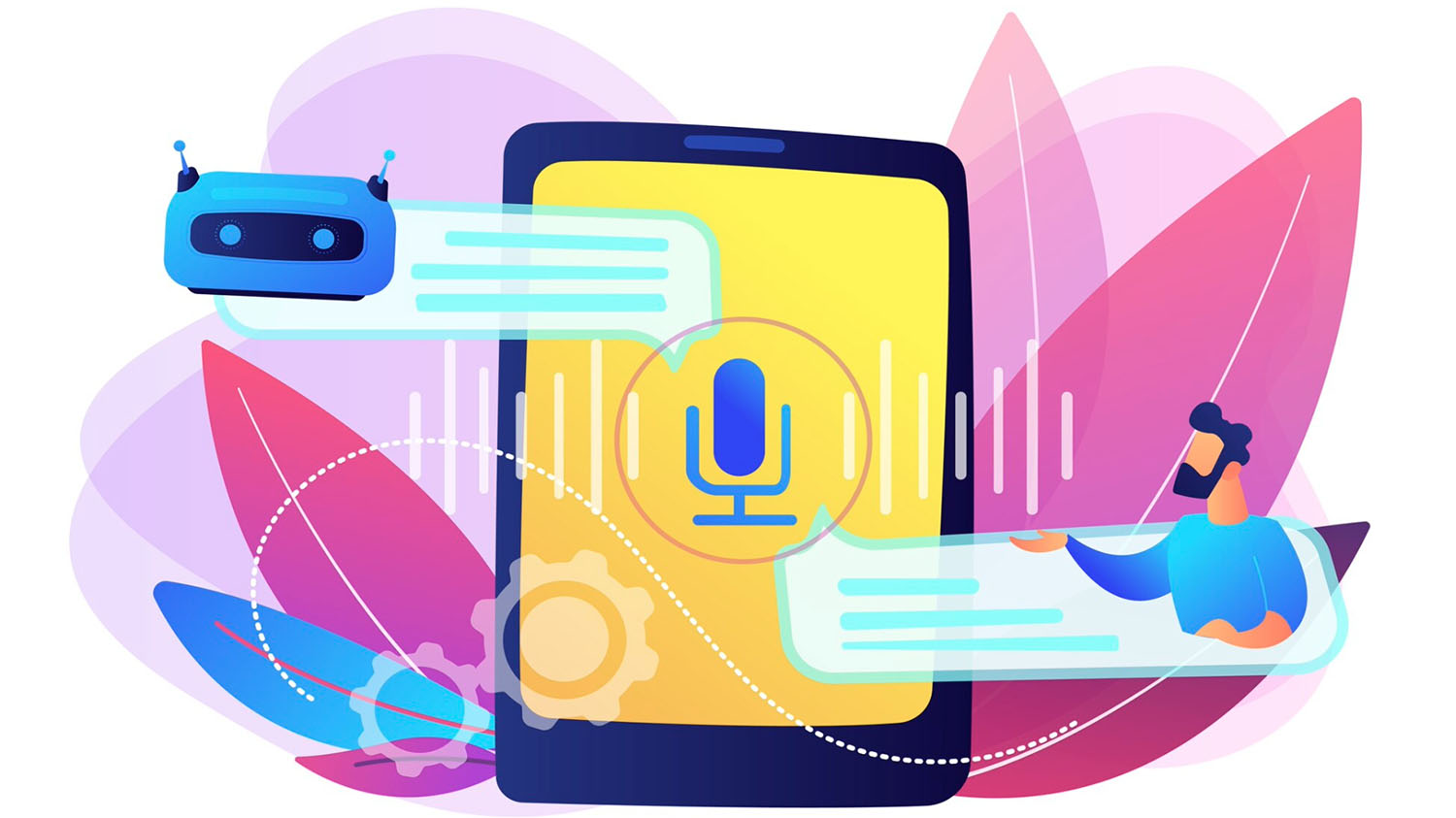
In 2026, your most frequent customer isn't a human scrolling through a browser, it's an AI agent navigating a voice-first world. While legacy brands are still paying millions for names that look good on a billboard, the forward-thinking elite are pivoting to Phonetic Fluidity, having discovered they were unknowingly paying the "Spelling Tax." If your brand name requires an explanation, a manual correction, or a repeat command to a voice assistant, you are bleeding conversion and trust with every interaction. At domainAlot, we've audited the shift from the eye to the ear, uncovering assets that outperform dictionary terms in the new Agentic Web. Inside this deep dive, we reveal the linguistic science of the 2026 economy, and the three-step audit every founder must perform before their next acquisition. Is your brand built to be seen, or is it built to be heard?
Posted: 05 Feb 2026
In 2026, the digital landscape has shifted from a visual-first to a voice-first economy, rendering the "visual-only brand" an endangered species. As AI agents and voice-activated commerce become the primary gatekeepers of web traffic, the traditional value of a domain has moved away from how it looks on a screen to its Phonetic Fluidity. By tracing the evolution of naming through the Descriptive, Vowel-Drop, and Abstract eras, it becomes clear that we have returned to a need for natural language, where brands like Otrivio represent the new gold standard because they pass the "Radio Test" with 1:1 phonetic accuracy. Ultimately, in an age where the screen is increasingly optional, ambiguity is a tax, and the most valuable digital real estate belongs to those whose names require no spelling, no clarification, and zero friction in a spoken world. Does yours...?
Posted: 21 Jan 2026

Once upon a time, when the internet was still in its infancy and countries were being designated their own unique website addresses known as a country code top-level domain (ccTLD) such as .us for the US, and .uk for the UK, a small Caribbean island of Anguilla, managed to land the address .ai. Unknown to anyone what .ai would become, in recent times, the .ai domain has grown into the digital hub for the global artificial intelligence revolution, driving a modern-day gold rush in the digital landscape. For startups, entrepreneurs, domain investors, and domain flippers alike, the question is simple and ultimately the same. Why are .ai domains so expensive compared to other domains, and are they worth it?
Posted: 19 Dec 2025

The term "web3" was first coined in 2014 by Gavin Wood, co-founder of Ethereum, to describe a decentralised online ecosystem based on blockchain technology. Since then, it seems to have become a media catch-all for concepts like crypto, NFTs, and the supposed "next generation of web ownership." Despite dominating headlines, web3, or Web 3.0, has failed to meet the revolutionary expectations once set for transforming the internet. In this third and final installment of his series, John Henkel examines the claims of blockchain supporters to determine if Web3 domains truly offer a viable alternative to traditional domain registration or are simply an illusion that supersedes their purported technology and innovation.
Posted: 01 Dec 2025

Web 3.0 is a prominent, yet overused term that is associated with a decentralised, blockchain-based internet. In this "utopian" and revolutionary virtual world, domain names, or Web 3.0 domains, are marketed as a permanent, censorship-resistant alternative to traditional domain systems, offering ownership without annual renewals. The truth, however, is far less convincing, including issues of compatibility with the existing Domain Name System (DNS). In this second part of his three-part series focused upon Web 3.0, John Henkel examines the underlying problems of these new domains, taking a closer look at what makes a blockchain-domain different, and why these problems are more serious than promoters of Web 3.0 care to explain.
Posted: 18 Nov 2025